Property Maintenance
Damp is one of the most common property problems in Yorkshire — and one of the most misunderstood. Many homeowners assume all damp is the same and treat it in the same way, only to find the problem keeps coming back. Understanding the type of damp you’re dealing with is the first step to fixing it properly. This guide explains the three main types of damp found in Yorkshire properties, how to identify each one, and what to do about it.
Contents
- Why damp is particularly common in Yorkshire
- Rising damp: what it is and how to spot it
- Penetrating damp: where water gets in from outside
- Condensation damp: the most common type
- How to tell which type you have
- DIY fixes vs. calling a professional
- The cost of ignoring damp
- Frequently asked questions
Why Damp Is Particularly Common in Yorkshire
Yorkshire has a wet climate, with above-average annual rainfall and a high proportion of older housing stock. Much of the region’s housing was built before modern damp-proofing was standard — Victorian and Edwardian terraces, stone-built cottages and early twentieth-century semis all predate the widespread use of damp proof courses and cavity wall construction.
This combination of heavy rainfall and older buildings makes damp a near-universal issue across the region. Understanding which type you’re dealing with determines how it should be treated. Getting this wrong — or using a quick cosmetic fix — means the problem will return, often worse than before.
If you’re unsure what’s causing damp in your home, our renovation and refurbishment team can carry out an assessment and recommend the right course of action.

Rising Damp: What It Is and How to Spot It
Rising damp occurs when moisture from the ground travels upward through a wall by capillary action. In a properly built modern property, a damp proof course (DPC) prevents this. In older Yorkshire properties, the DPC may be absent, damaged or bridged.
How to identify rising damp
- Damp patches that stop at a consistent height — usually no more than one metre from floor level
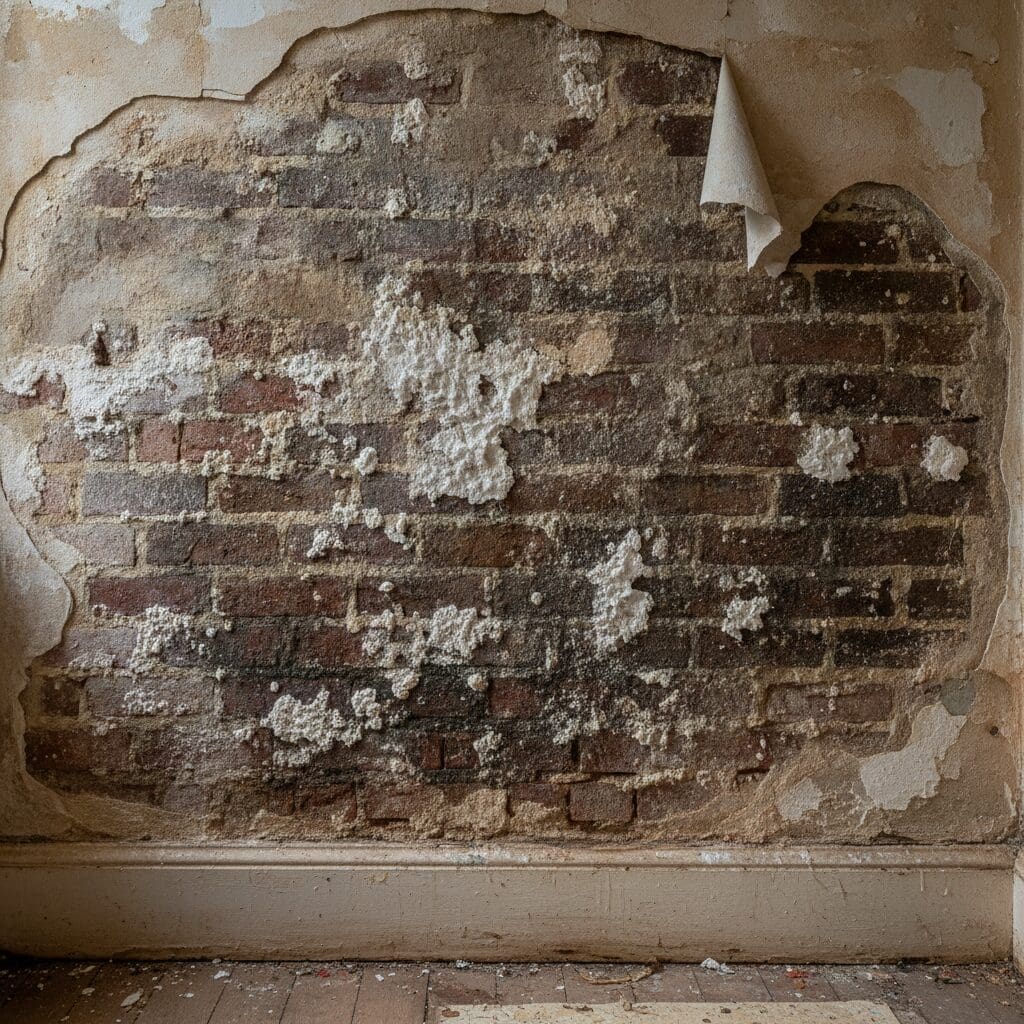
- A visible “tide mark” of salts on the wall surface — white or yellowish crystalline deposits
- Plaster that is soft, powdery or flaking near the base of walls
- Peeling wallpaper or paint starting from the bottom of walls
- An earthy, musty smell at ground floor level
The salt deposits (efflorescence) are a distinctive marker. As moisture rises through masonry, it carries hygroscopic salts from the ground with it. When the moisture evaporates at the surface, these salts are deposited in the plaster, causing it to absorb more moisture from the air and creating a self-perpetuating problem.
Common causes in Yorkshire properties
Rising damp is most often caused by a failed, absent or bridged DPC. Common bridges include soil or paving raised above the DPC level outside, internal floor screeds covering the DPC, or rendering that runs continuously from above to below the DPC line. External ground levels that have been raised over time — common in older Yorkshire streets — are a frequent culprit.
What to do
Rising damp cannot be resolved by redecorating over it. The DPC needs to be reinstated or a new chemical DPC injected into the wall. Existing plaster will need to be stripped back and replaced with specialist renovating plaster that resists salt contamination. This is not a DIY job in most cases — the diagnosis needs to be accurate and the remedial work done correctly to prevent recurrence.
Penetrating Damp: Where Water Gets in from Outside
Penetrating damp is caused by water entering the property through the external fabric of the building — through walls, around windows, through roofs or via defective guttering and downpipes. Unlike rising damp, it can appear at any height on the wall and often follows rain events.
How to identify penetrating damp
- Damp patches that appear or worsen after rain
- Staining or damp on the inner face of an external wall
- Patches not confined to a specific height
- Damp appearing near windows, around door frames or in roof spaces
- Dark staining on external brickwork above the damp patch inside
Common causes in Yorkshire properties
Penetrating damp in Yorkshire properties most commonly comes from failed or missing pointing in brickwork or stonework, cracked or porous render on solid-walled properties, defective or blocked guttering allowing water to run down external walls, damaged or missing roof tiles, failed flashing around chimneys or dormers, and cracked window or door seals.
What to do
The source of the water ingress must be identified and sealed before any internal redecoration. Our brickwork and repointing service and roofing and guttering team handle the most common causes of penetrating damp in Yorkshire. Once the external defects are repaired, affected internal plaster can be replaced and the wall allowed to dry before redecorating.
Condensation Damp: The Most Common Type
Condensation is the most common form of damp in Yorkshire homes — and also the most frequently misdiagnosed as rising or penetrating damp. It occurs when warm, moist air comes into contact with cold surfaces and the moisture condenses as liquid water.
How to identify condensation damp
- Black mould appearing in corners, on window reveals and behind furniture against external walls
- Damp patches not clearly tied to rain events
- Steamed-up windows in the morning
- Musty smell throughout the property, not confined to one area
- Damp appearing on north-facing walls more than others
What causes it
Condensation damp is caused by an imbalance between moisture generation, ventilation and heating. Properties with poor ventilation, restricted airflow, inconsistent heating and modern insulation fitted without adequate ventilation are particularly susceptible. Paradoxically, retrofitting insulation or draught-proofing without upgrading ventilation can worsen condensation problems.
What to do
Condensation cannot be resolved by redecorating or using anti-mould paint alone. The underlying cause — excess moisture and insufficient ventilation — needs to be addressed. Practical steps include installing positive input ventilation, improving heating consistency, fitting extractor fans in kitchens and bathrooms with appropriate extraction rates, and keeping background heating on at a low constant level rather than heating intermittently.
Our property renovation team can advise on ventilation solutions appropriate for your property type.
How to Tell Which Type of Damp You Have
Getting the diagnosis right before spending money on treatment is essential. The wrong treatment wastes money and leaves the underlying cause unaddressed.
| Indicator | Rising Damp | Penetrating Damp | Condensation |
|---|---|---|---|
| Height on wall | Below 1m | Any height | Usually corners/reveals |
| Pattern | Consistent tide mark | Follows water path | Patches and black mould |
| Worse after rain? | No | Yes | No |
| Salt deposits? | Yes | Sometimes | No |
| Location | Ground floor base | External walls, roof | Cold surfaces, corners |
If you’re unsure, a professional inspection is always the most reliable approach. Self-diagnosis based on appearance alone can lead to treatments that mask rather than solve the problem.
DIY Fixes vs. Calling a Professional
Some damp-related maintenance is within reach of a competent DIYer. Clearing blocked gutters, repointing a small section of damaged mortar, improving ventilation and replacing window seals are all manageable tasks that can reduce the risk of damp taking hold.
However, chemical DPC installation, significant repointing or render repair, structural investigations, and any work involving asbestos-containing materials in older properties should be carried out by qualified tradespeople. Getting this work wrong can be costly to put right and may affect the structural integrity of the property.
Our property maintenance team covers brickwork, roofing, carpentry and drainage — the services most commonly needed to resolve damp at its source.
The Cost of Ignoring Damp
Damp that is left unaddressed causes progressive damage. Timber joists and floorboards near rising damp are vulnerable to wet rot. Wall plaster that stays damp will continue to deteriorate. Persistent black mould can affect air quality and exacerbate respiratory conditions.
From a financial perspective, the cost of dealing with damp at the source is almost always significantly less than the cost of repairing the secondary damage caused by leaving it. A £300 gutter repair today can prevent £3,000 of internal wall damage in two years’ time.
If you’ve noticed early signs of damp in your Yorkshire property, it’s worth acting on them promptly. Get in touch with our team for an honest assessment and practical advice on the most cost-effective solution.
Worried About Damp in Your Yorkshire Property?
We Fix Yorkshire provides property maintenance and repair services across Yorkshire and North Lincolnshire. Our team can inspect the source of damp, carry out the necessary external repairs and advise on the most effective remediation approach.
Frequently Asked Questions
What is the most common type of damp in Yorkshire homes?
Condensation is the most common type, accounting for the majority of damp-related problems. Black mould in corners, on window reveals or behind furniture against external walls is the most visible sign.
How much does it cost to treat rising damp in a Yorkshire property?
Treating rising damp typically costs £500 to £2,500 depending on the extent of the work, including injecting a chemical damp proof course and replastering affected areas with specialist renovating plaster.
Can I paint over damp or mould?
Painting over damp or mould will not solve the problem — it will return. The source of the moisture must be addressed before redecorating. Anti-mould paint can suppress surface mould temporarily but is not a substitute for identifying and resolving the underlying cause.
Is damp always a sign of a serious problem?
Not always. Early-stage condensation or a minor guttering defect causing a small area of penetrating damp can be resolved quickly and affordably if caught early. The concern is when damp is ignored and allowed to cause progressive structural or plaster damage.
Does We Fix Yorkshire carry out damp-related repairs?
Yes. We handle brickwork repointing, roofing and guttering repairs, carpentry and drainage work — all common causes of penetrating damp. Call us on 0330 1 333463 to discuss your situation.