

Emergency Plumbing — Hull & East Yorkshire
Burst Pipe in Hull? What to Do in the First 30 Minutes (and Who to Call)
A burst pipe is one of the most stressful things that can happen to a property. Water is spreading, you don’t know where it’s coming from, and every minute costs you more damage and more money.
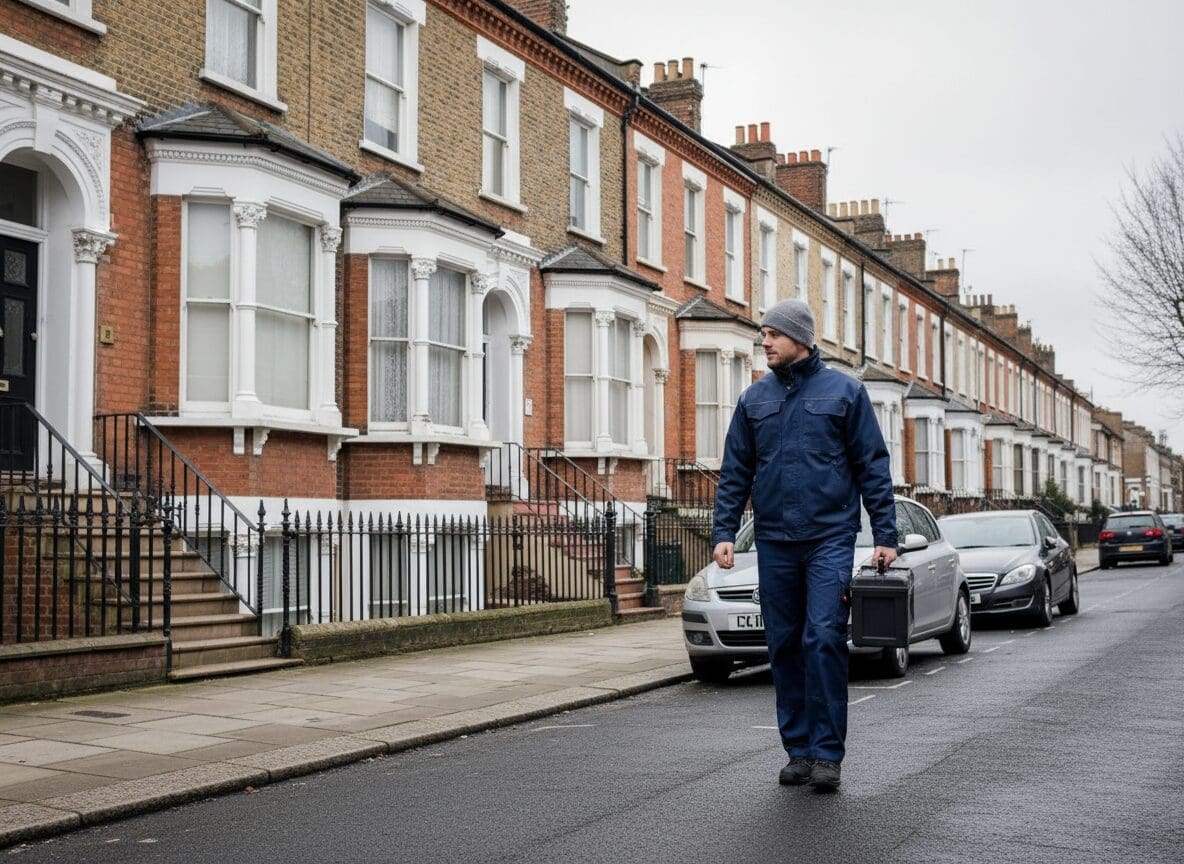
This guide tells you exactly what to do in the first 30 minutes after a burst pipe in Hull — how to stop the damage, what not to touch, and when to call an emergency plumber Hull homeowners and landlords rely on.
Step one: shut off the water supply immediately
Before you do anything else, find your stopcock and turn it off. The stopcock controls the mains water supply to your property and stopping the flow is the single most important thing you can do in the first few minutes of a burst pipe emergency.
In most Hull properties, the stopcock is located under the kitchen sink, in a cupboard near the front door, or in the garage or utility room. In some older Hull terraces, you may also have an external stopcock under a cover in the pavement — though you should not touch the external one, as it belongs to Yorkshire Water and is their responsibility.
Turn the internal stopcock clockwise until it stops. If the valve is stiff or won’t close properly, call 0330 133 3463 immediately — a temporary water shut-off tool may be needed.
What if you can’t find the stopcock?
If you’ve never located your stopcock before, now is a bad time to find out you don’t know where it is. Once this emergency is resolved, find it and label it. For Hull properties with shared access or unusual layouts, this can be trickier than you’d expect.
If you genuinely cannot find or operate the internal stopcock, call Yorkshire Water on 0800 573 553 — they can shut off supply at the external valve and should respond quickly to genuine emergencies.
What to do in the first 30 minutes
Once the water is off, work through this checklist in order. These steps limit damage and give your emergency plumber Hull property owners rely on the best possible starting position.
Turn off your boiler and stop using any hot taps
After shutting the mains supply, switch off your boiler at the programmer or thermostat — not just the hot water but the heating too. If your hot water cylinder is at risk of overflow or if there’s water near your boiler, do not attempt to drain or interfere with the unit yourself. A gas appliance in a flooded area is dangerous territory.
Switch off electricity in affected areas
Water and electrics are a serious combination. If water is near sockets, light fittings, or consumer units, turn off the circuit breaker for that area at the fuse board. If you’re unsure which circuit covers the affected rooms, turn off the main switch. Do not enter flooded rooms until electricity is confirmed off.
Open taps to drain remaining water from pipes
With the mains off, open cold taps at ground level to help drain any remaining water from the pipe system. This reduces pressure in the pipes and slows any continued seepage from the burst point.
Contain and document the damage
Use buckets, towels, and anything absorbent to contain spreading water. Take photographs and videos of the damage as you go — these are essential for any insurance claim. Note where the water is coming from, what floor it’s on, and when you first noticed the problem.
Move valuables and belongings out of the affected area
If water is reaching carpets, furniture, or belongings, move what you can out of the way. Water damage to soft furnishings and flooring escalates quickly — even a short period of saturation can mean replacement rather than drying.
When to call an emergency plumber Hull property owners can rely on
You should call an emergency plumber in Hull as soon as the water is off and your immediate safety is secured. Do not wait to see if the situation improves on its own — a burst pipe needs a professional repair, and delays extend both the damage and the cost.

You need an emergency plumber immediately if:
- You can hear or see water actively escaping from a pipe
- You have a ceiling that is bulging or dripping — this means water has pooled above and the ceiling may collapse
- Water is near your fuse board, sockets, or electrics
- You cannot locate or operate the stopcock
- The burst pipe is on a shared or communal system in a block of flats
- A landlord property with tenants in residence — you have a legal obligation to restore water within a reasonable timeframe
We Fix Yorkshire provides emergency plumbing repair across Hull and the wider East Yorkshire area. Call us on 0330 133 3463 and we’ll get someone to you as quickly as possible.
Why Hull properties are especially vulnerable to burst pipes
Hull has a high proportion of older housing stock — Victorian and Edwardian terraces, pre-war semis, and post-war council-built properties that make up a significant share of the city’s housing. Older properties carry specific plumbing risks that make burst pipes more likely and more severe when they happen.
Ageing pipework
Many Hull properties still have original lead or iron pipework that has never been replaced. These materials corrode over decades and are far more susceptible to bursting under pressure or temperature stress than modern copper or plastic alternatives. If your property has never had its pipework inspected, you won’t know what’s under your floorboards until something fails.
Cold snaps and freeze-burst cycles
Yorkshire winters bring cold spells that can freeze water in exposed or poorly insulated pipes — particularly in loft spaces, under suspended floors, and on external walls. When frozen water expands and then thaws, the pressure burst can be dramatic. East Yorkshire’s coastal position means Hull can experience particularly sharp frosts that catch homeowners off guard.
Properties left vacant
Hull has a number of properties that are periodically left empty — between tenancies, during renovation, or during winter months when a second property sits unoccupied. Vacant properties with the heating off are at serious risk during cold weather. If you own or manage a vacant property in Hull, keeping the heating on low throughout winter is not optional — it’s basic flood prevention.
Terrace housing and shared walls
Hull’s terrace housing means that a burst pipe in one property can quickly affect neighbours. Water travels through floors and walls faster than most people expect. If you’re in a terrace and you suspect a burst, let your immediate neighbours know — and if the burst is on a shared wall, your neighbour may be able to identify the source from their side.
What to expect from an emergency plumbing callout in Hull
When We Fix Yorkshire arrives at your Hull property for an emergency plumbing callout, here’s how the process works.
Assessment and source identification
The first priority is identifying exactly where the burst has occurred and understanding the extent of the damage. This isn’t always straightforward — water travels along pipe runs and can emerge some distance from the actual failure point. We’ll trace the pipe route and use moisture detection where needed to find the source accurately.
Temporary repair or full repair
Depending on the location, accessibility, and severity of the burst, we’ll either carry out a full repair on the same visit or install a temporary fix to restore water supply while a longer repair is scheduled. We’ll always explain what we’ve done and what the next step is before we leave.
Water supply restoration
Once the repair is confirmed, we restore your water supply and check the system for any secondary leaks or pressure issues. We don’t consider the job done until the system is confirmed watertight.
Advice on drying out and damage assessment
We can advise on drying out the affected area, whether you need a specialist drying company, and what to photograph and document for insurance purposes. We can also flag any areas of concern we spotted during the repair — older pipework that may need attention before next winter, for example.
Emergency plumber costs in Hull: what to expect
Emergency plumbing costs in Hull vary based on when you call, what the repair involves, and how long the job takes. Here’s a general guide to what you might expect to pay.
| Job type | Typical cost range (Hull) |
|---|---|
| Emergency callout (evenings/weekends) | £80 – £150 call-out fee + labour |
| Simple pipe repair (accessible location) | £150 – £300 total |
| Pipe repair requiring access to floor or wall | £300 – £600+ |
| Full pipe section replacement | £400 – £800 depending on run length |
These are indicative ranges and not quotes. Costs are affected by access difficulty, the materials needed, whether the property is occupied, and what’s discovered once work begins. We’ll always give you a clear picture of costs before work starts.
If you’re a landlord, the cost of an emergency plumber is normally deductible as a maintenance expense — and acting promptly to prevent further damage is important for insurance purposes too.
Emergency plumbing repair across Hull and East Yorkshire
Don’t wait to see if a burst pipe sorts itself out — it won’t. Call We Fix Yorkshire and we’ll get the right person to your Hull property as quickly as possible.
Frequently asked questions
How quickly can you get to a burst pipe emergency in Hull?
Response times depend on current demand and location within Hull. We aim to reach most Hull properties within a few hours for genuine emergencies. Call us on 0330 133 3463 and we’ll give you a realistic timeframe when you get through.
My ceiling is dripping — is that a burst pipe?
A dripping or bulging ceiling almost always means water has collected above it, either from a burst pipe, a leaking joint, or water escaping around a bath or shower. Shut off the mains water immediately and call us. If the ceiling looks close to collapsing, evacuate the room — a waterlogged ceiling holds a significant weight of water.
Will my home insurance cover a burst pipe?
Most standard home insurance policies include trace and access cover, which pays for finding the source of a leak, and buildings insurance often covers damage caused by escape of water. Check your policy wording and report the damage to your insurer as soon as possible. We can provide a written report of what we found and what we repaired.
Can I repair a burst pipe myself?
Temporary compression fittings can be used to stop immediate water flow on some pipe types, but these are not permanent repairs. Burst pipes need proper assessment — the burst point may be a symptom of a wider problem, such as corroding pipework or excessive pressure. A professional repair ensures the system is safe and the problem won’t recur in the same location.
What if the burst pipe is in the ceiling or a wall?
Buried or concealed pipe bursts require opening up — either lifting floorboards, cutting into ceilings, or chasing into walls. This sounds dramatic, but it’s standard work and we always repair any access points as part of the job. We’ll explain what access is needed before we start.


